Restoring the Tain River: How Agroforestry in Ghana is Rewriting the Story of Traditional Land


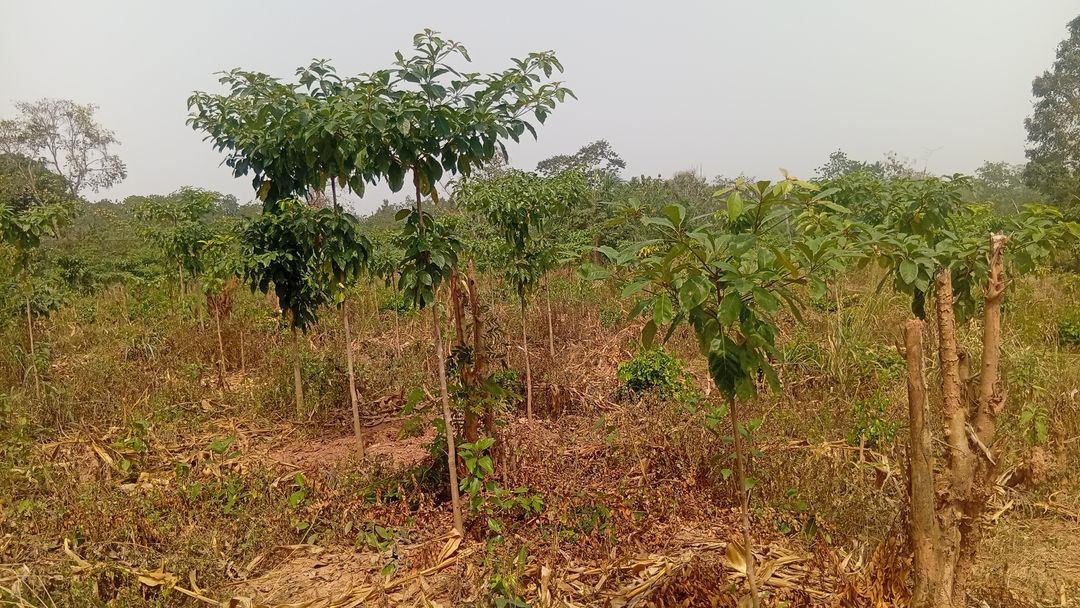
Before Emma Agyapong and the Environment and Agroforestry Foundation began working with the communities surrounding the Tain River, the land was exhausted. Riverbanks were bare. Cattle competed with families for shrinking water sources. Youth were leaving for the cities- some drawn into illegal mining. Decades of continuous farming, uncontrolled grazing, and bushfires had collapsed soil fertility and reduced rivers to seasonal trickles.
This land is part of the Oforikrom Traditional Area in the Berekum East District of Ghana's Bono Region, a transitional ecological zone of riparian forests and Guinea savannah woodland, and one under severe pressure.
"When we entered the communities, there was a struggle with soil fertility and water sources, and they didn't have that mindset of conservation. They didn't even know that the loss of trees has a link with the loss of soil fertility and the shortage of water during the dry season." — Emma Agyapong, Director of the Environment and Agroforestry Foundation
Changing that mindset was no small task. But the work paid off. Communities became more enthusiastic than ever about restoring the surrounding forest, particularly along the riverbanks where the damage ran deepest.
Land, Income, and a Changing Community
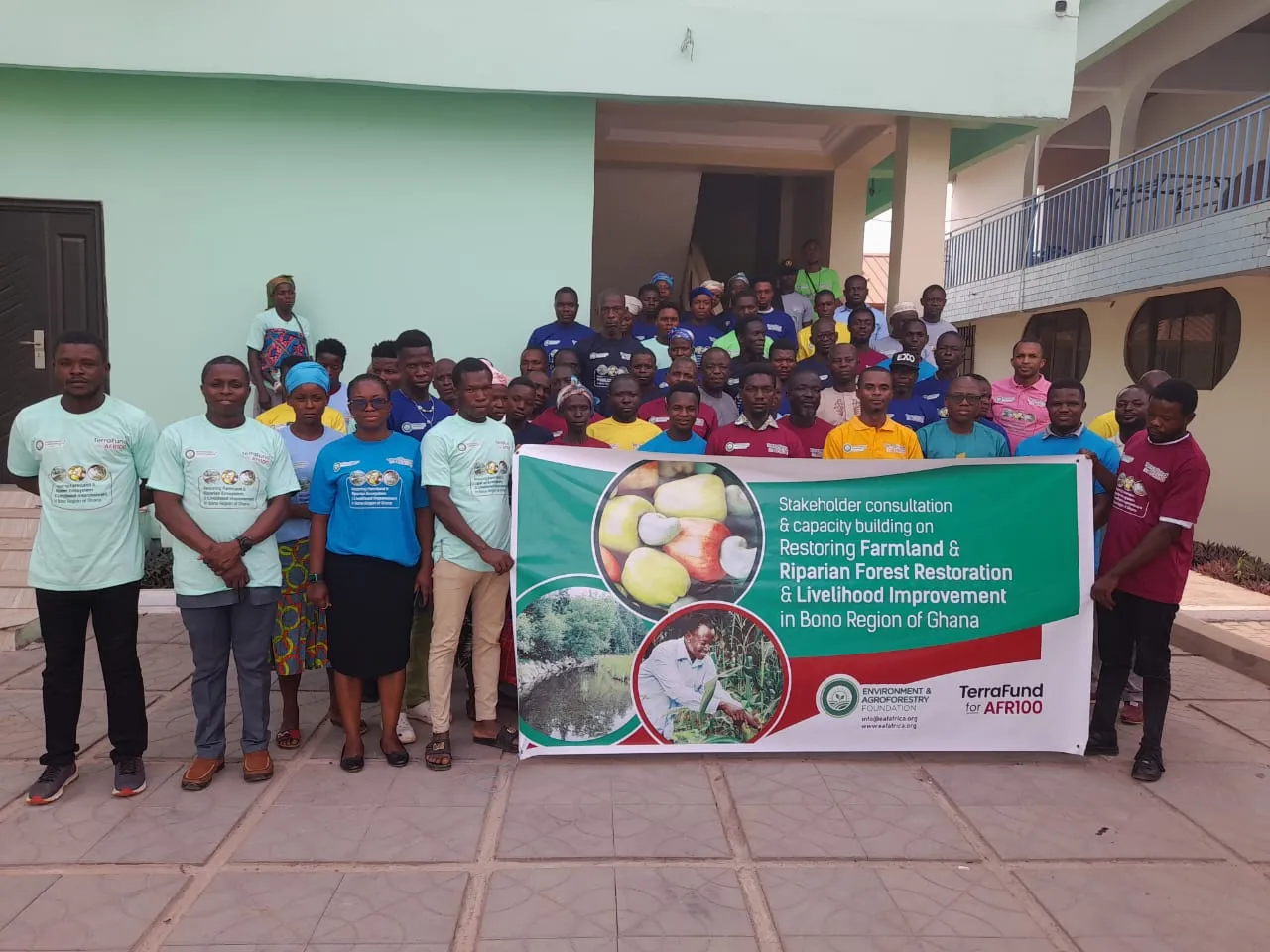
Today, the project area spans 242 hectares, with 150 actively under restoration. Over 200 farmers participate through training and hands-on activities: nursery establishment, tree planting, and monitoring. Of those farmers, 40% are women, 66% are youth, and 94% are indigenous community members.
"Previously, women were not even allowed to own their farms. Now they have their own source of income."
That shift in agency is one of the project's most significant impacts. Women who were once excluded from land ownership now manage their own farms, sell crops, and generate independent income. Communities lead their own decision-making, planning, and data collection. And the youth who left are coming back, drawn by the prosperity taking shape around them.
From Paper Records to a Credible Carbon Future
"When I heard that even a one-hectare plot could get a carbon credit, I said — What?"
Before joining Open Forest Protocol, Emma and the communities of the Bono Region tracked everything manually on spreadsheets. Carbon markets felt inaccessible, too costly, too complex, and with no credible audit trail to show for their efforts.
That changed with OFP's digital solutions. Community members were trained to use digital data collection tools and diameter tape measurements, skills they now apply independently in the field. The result is a transparent, verifiable record of their impact that can speak to the wider carbon economy.
"Joining the OFP network has significantly helped us overcome the financial, technical, and technological barriers to accessing carbon accreditation for our forest project."
For smallholder farmers, the idea of generating carbon credits from even a single hectare is transformational. It opens a door that most never imagined existed.

The Impact So Far
The numbers tell part of the story:
- ~120,000 seedlings planted across 17 species, including IUCN-listed endangered, vulnerable, and threatened species
- Wildlife and birds are returning; water quality and flow in the Tain River have measurably improved
- Cashew trees planted through agroforestry intercropping are now bearing fruit
- New livelihoods are being developed, including vegetable farming and beekeeping
- Carbon sequestration is contributing to local climate resilience
But the broader picture may be just as significant. With over 60% of Ghana's land community-owned, the potential for smallholder-driven restoration is enormous — and the Tain River project is now a replicable model, actively sought out by other villages and towns.
"Sometimes you go back, and the place is mismanaged. But with OFP and the 40-year management framework, that changes."
Looking ahead, Emma is focused on securing additional funding for expansion through carbon credits, agroforestry income, and continued partnership with OFP. The community will be able to monitor their work and demonstrate to the world that you don’t have to have thousands of hectares to change the landscape- just the passion and care to do so.


Get the freshest news
Sign up with your email address to receive fresh news and updates.
Latest posts

Creating the highest integrity and most verifiable nature-based carbon credits, at scale.
.png)


